Coming apart and coming together: Notes on having a process to trust in
Over the past few years I’ve longed to have a predefined art-making process that would limit the infinite decisions in art-making. A structure that would offer me just enough certainty to help me to stop thinking, let go, and lose myself in the art-making. Something to trust in when I feel like I have no idea what I’m doing and it feels hard to trust in myself or my creativity.
Well, this year I’m noticing some patterns developing in my art-making that’s looking very much like a process! And I’m happy to report that I’m finding it very liberating to have this structure to lean on; a knowing of the next step to take, even when I have no idea what the outcome of all the steps will be.
Another wonderful reward of this process is that it separates out some of the things I love and the analysis that’s also important for creating a successful finished piece. This allows me to focus on savoring just one part of the art-making at a time. It’s feeling simpler, more spacious, more yummy!
Here’s what my process is looking like…
1.) Develop my colour palette
I’ve fallen in love with colour play and I’m so enjoying exploring subtle colour changes, overlays, and pairings. I’m realizing that, for me, colour plays a huge role in the feeling of an artwork, and I’m finding some new colours that are lighting me up (hello, terracotta and periwinkle!)
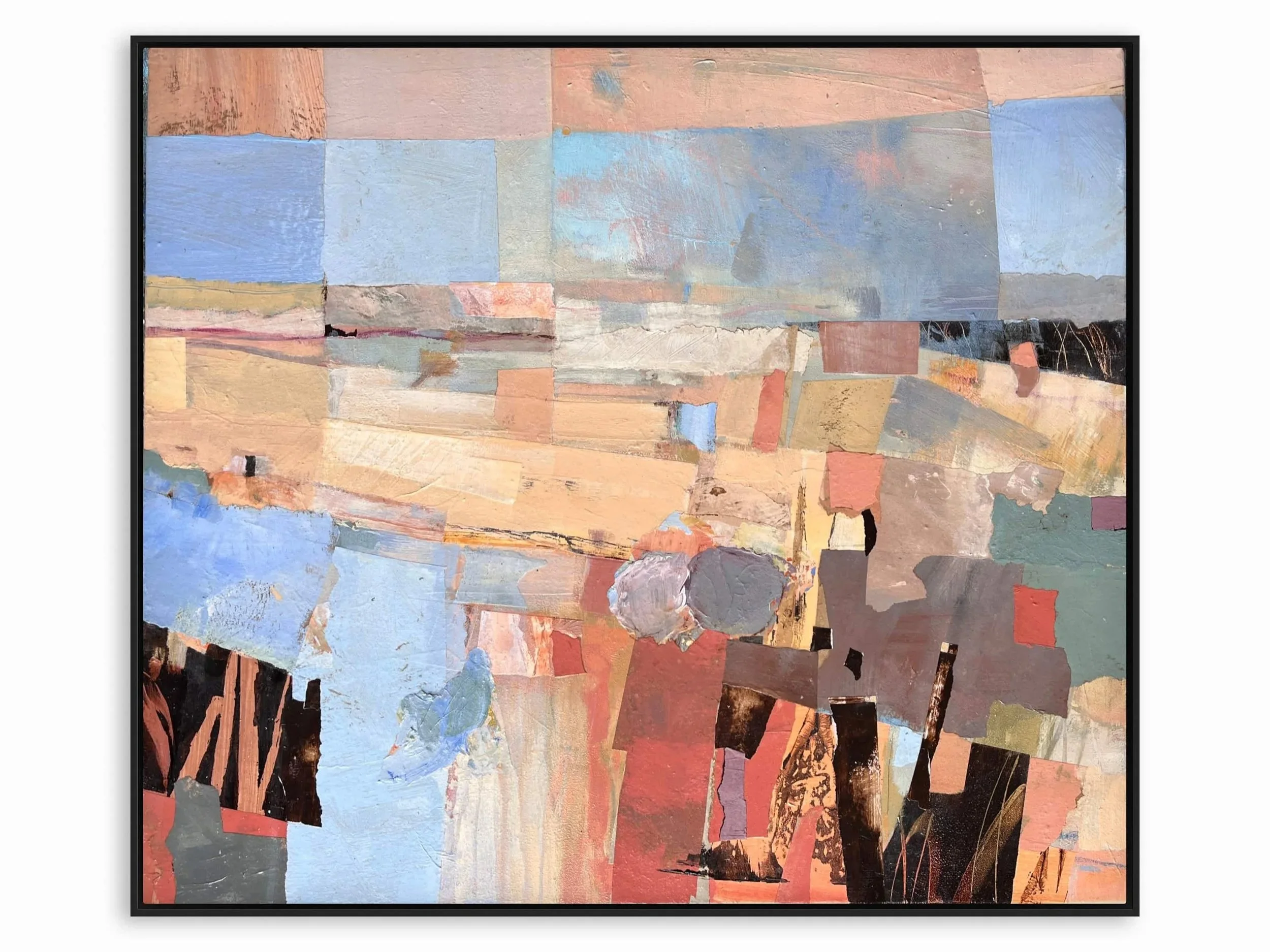
“The Sky Was” (2025)
I also love that, when I pick colours that evoke a particular landscape, I feel like I can let colour carry the heavy-lifting of evoking the landscape and then I feel free-er to play with abstracting the shapes and lines.

And who doesn’t love mixing up delicious pots of new paint colours?!
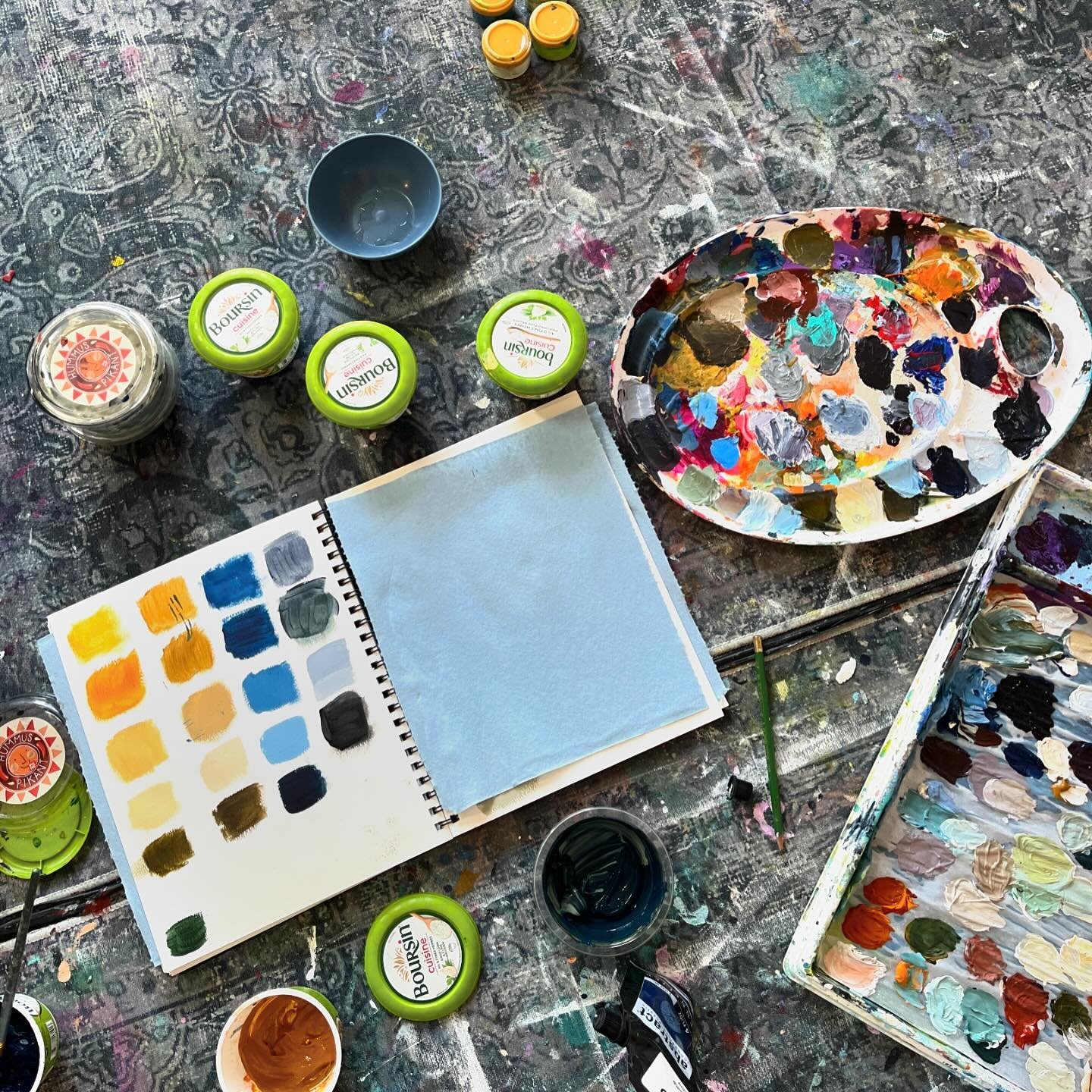
2.) Mess, play, experiment, recycle, repeat!
There’s an aliveness that’s so evident in an artwork where the artist has gotten lost in play - even for just a moment. And those moments are my favourite because they’re where the fun, mystery, and healing happen in the creative process.
But, as an adult and a working artist, messing, playing, and experimenting don’t always come naturally, so it’s a constant practice to find ways back into this kind of free mindset. Divorcing free play from some of the more analytical art-making skills, like composing, is helping me to mess and play and experiment, which is proving fun, and also offering me some exciting results.
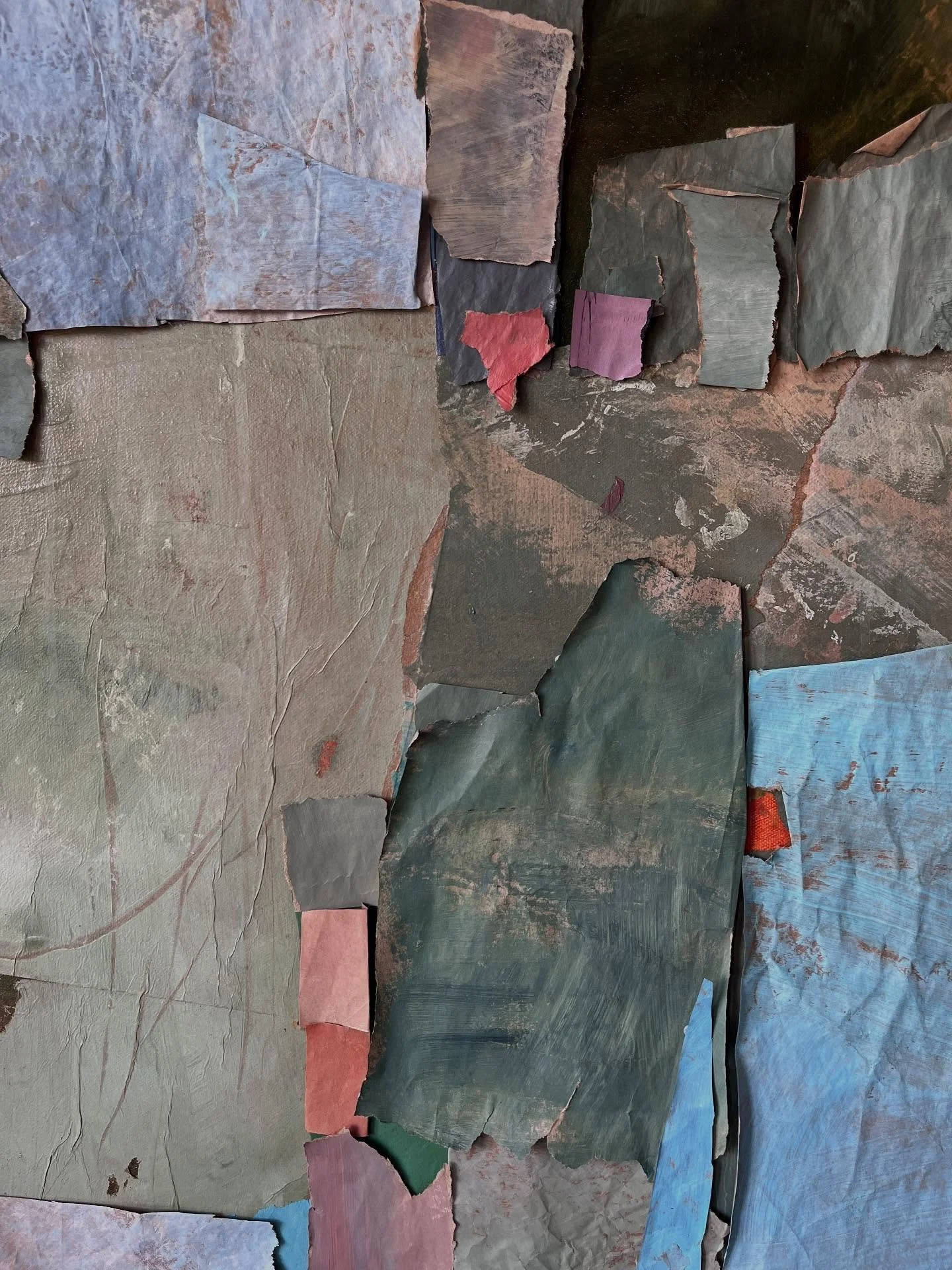
Using the paint colours I’ve mixed up, I paint large sheets of brown recycled packaging paper. Some of the paper is blank to begin with, and I paint some of them with plain colours and others I smoosh multiple colours onto, having fun with mixing up additional new colours and tones. The brown paper itself provides a lovely warm backing colour that I love to let through here and there by keeping my painting messy.
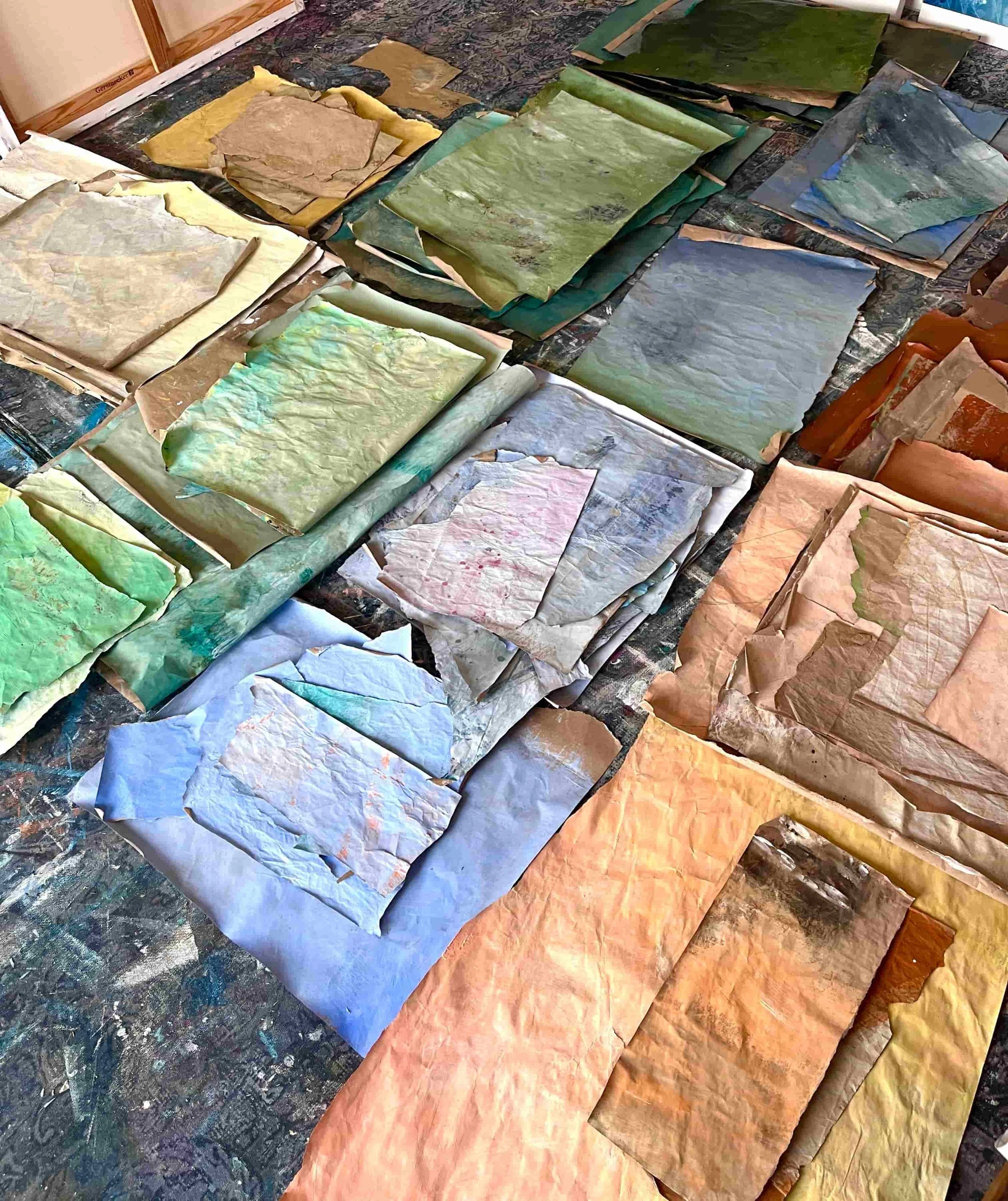
Other sheets of the brown paper have already been used as table cloths or ground sheets for my art-making, so they have some wonderful colours and textures and marks on them already. So I play on top of those with transparent coats of paint, allowing the random pre-existing beautiful mess to show through. I also make happy messes on top of some of my plain painted papers, using all kinds of mark-making and printing techniques.
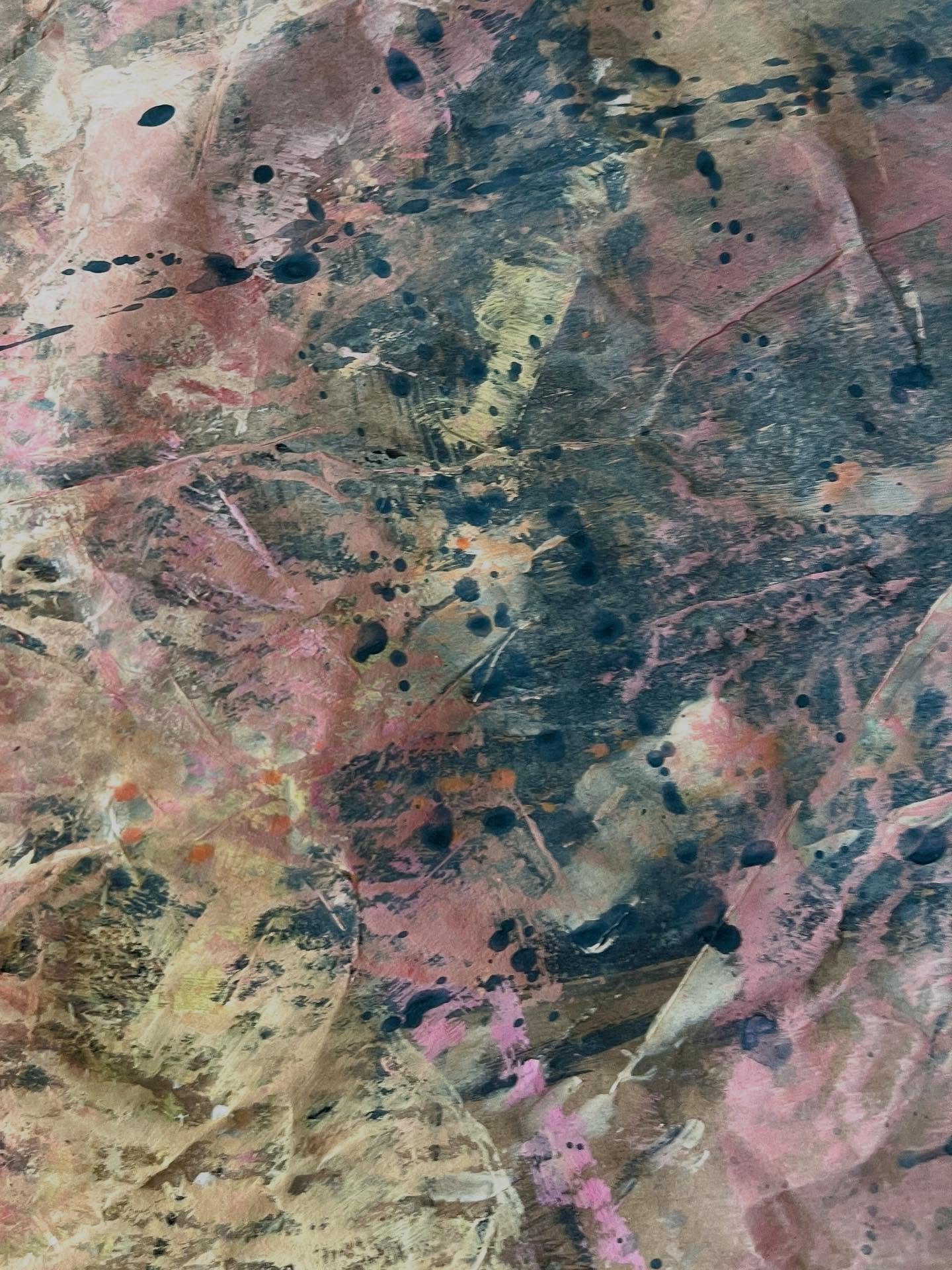
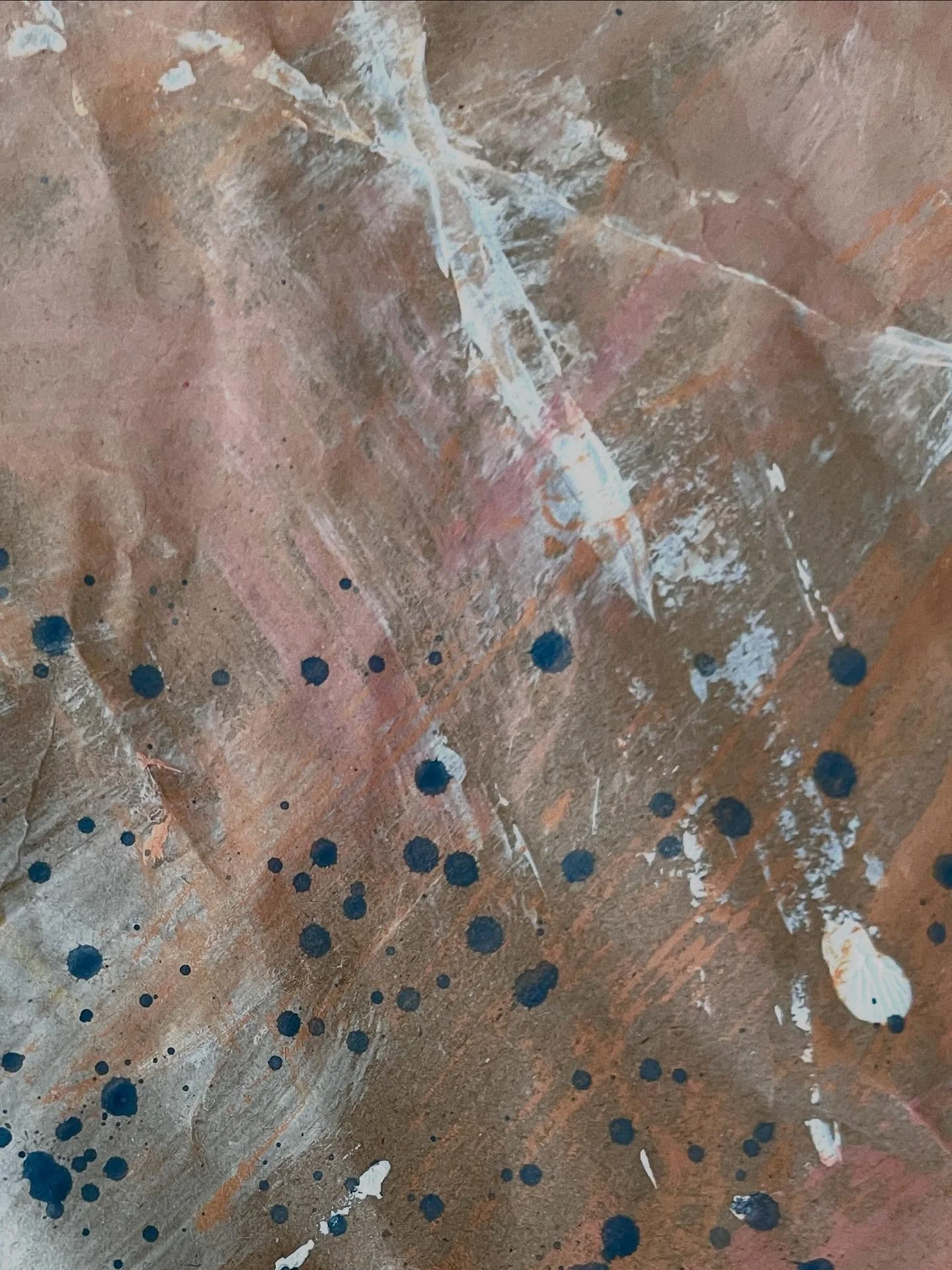
3.) Build the “big bones” of my composition
The next step is to search through my treasure trove of colours and papers and pull out a few that really sing to me. I try to notice what feels exciting rather than giving it too much thought. I know that I want to create an abstract landscape-ish subject. With that in mind, I cut, tear, and stick down a few large shapes of papers to create the big bones of my composition.
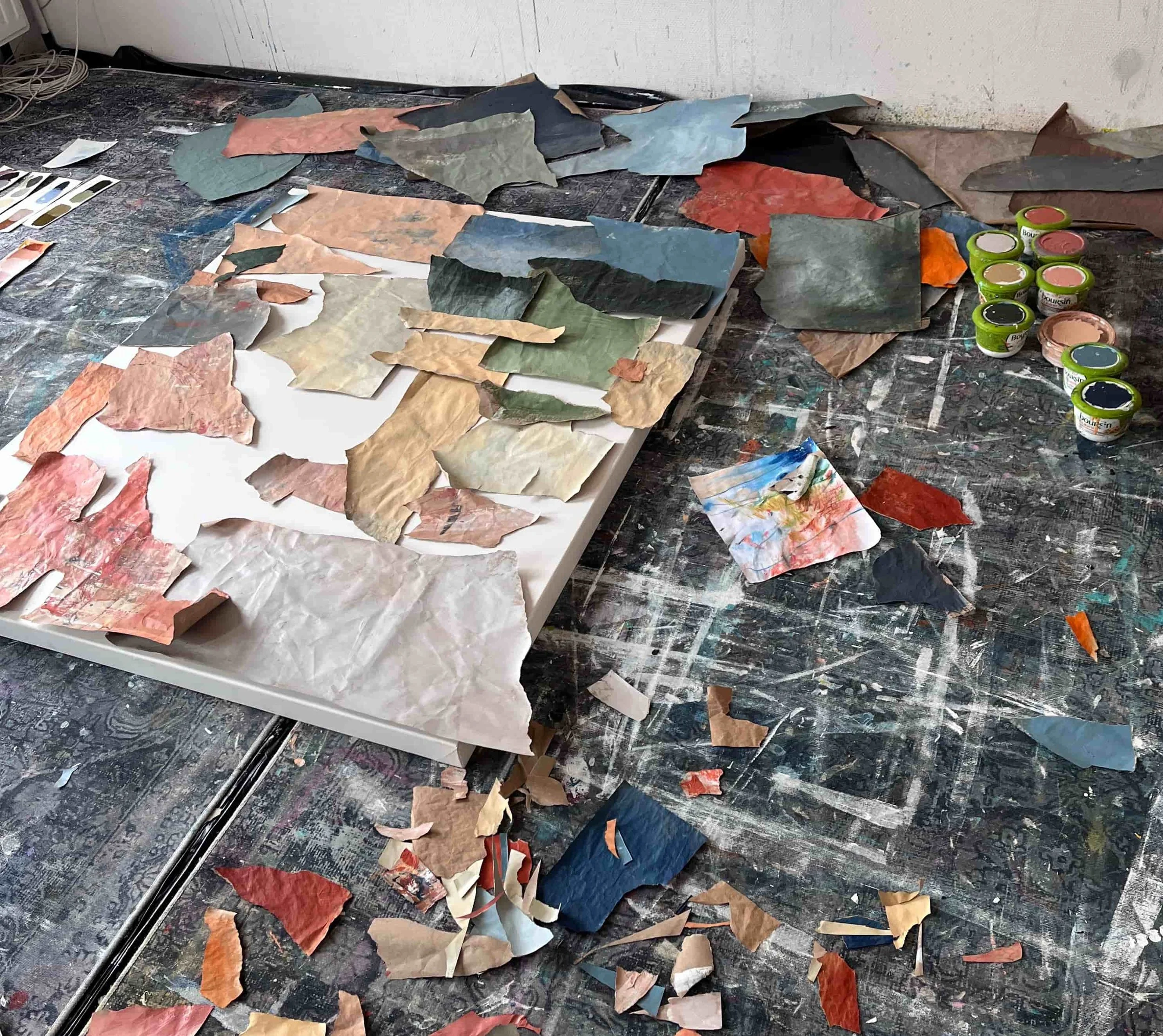
Sometimes I’ve also played and messed on the canvas that I’m working on, and I love to incorporate that by leaving some of that to show through between the collaged papers.
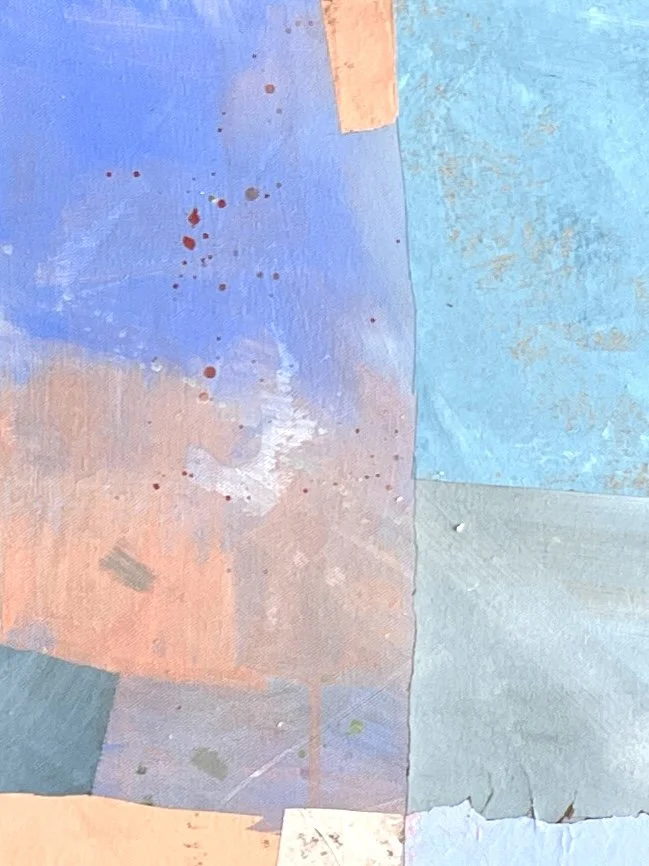
Can you tell which parts of this crop of “Now hemmed in, now grasping all” are the original painted canvas and which parts are collaged papers?
4.) Search, explore dynamically, and refine
From this point on I start working more slowly to place smaller papers that build further texture and depth and improve the overall design. I stick the smaller papers temporarily with Blu Tack so I can move them around lots to explore and play with different options. I find this flexibility very freeing and I’m enjoying finding some exciting, surprising , and more courageous ways of abstracting or developing my compositions. A lot still changes at this point!
I work in iterations of permanently gluing small papers, stepping back to review, and then dynamically exploring and Blu-Tacking another round of papers, before bringing out the permanent glue again.
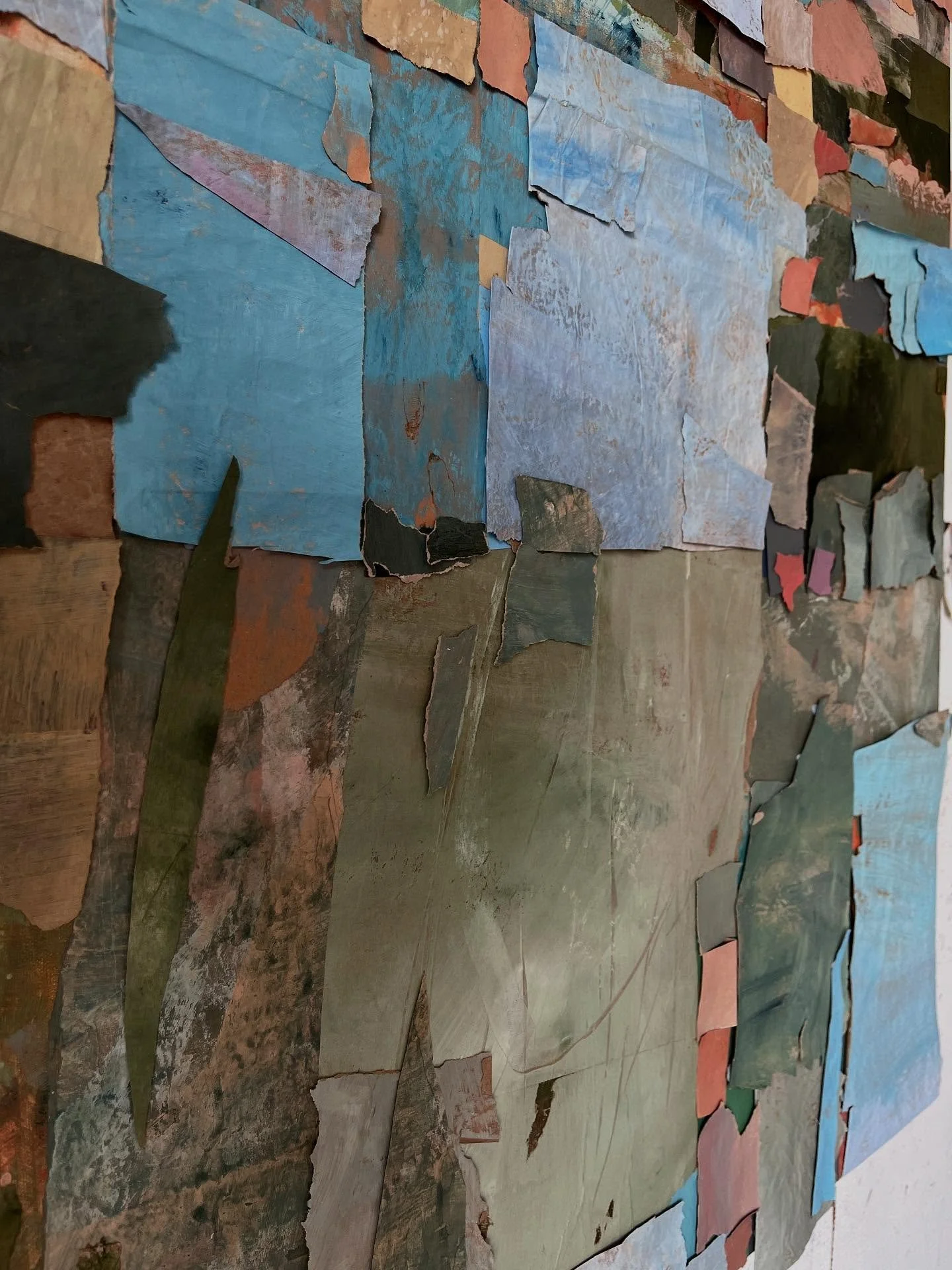
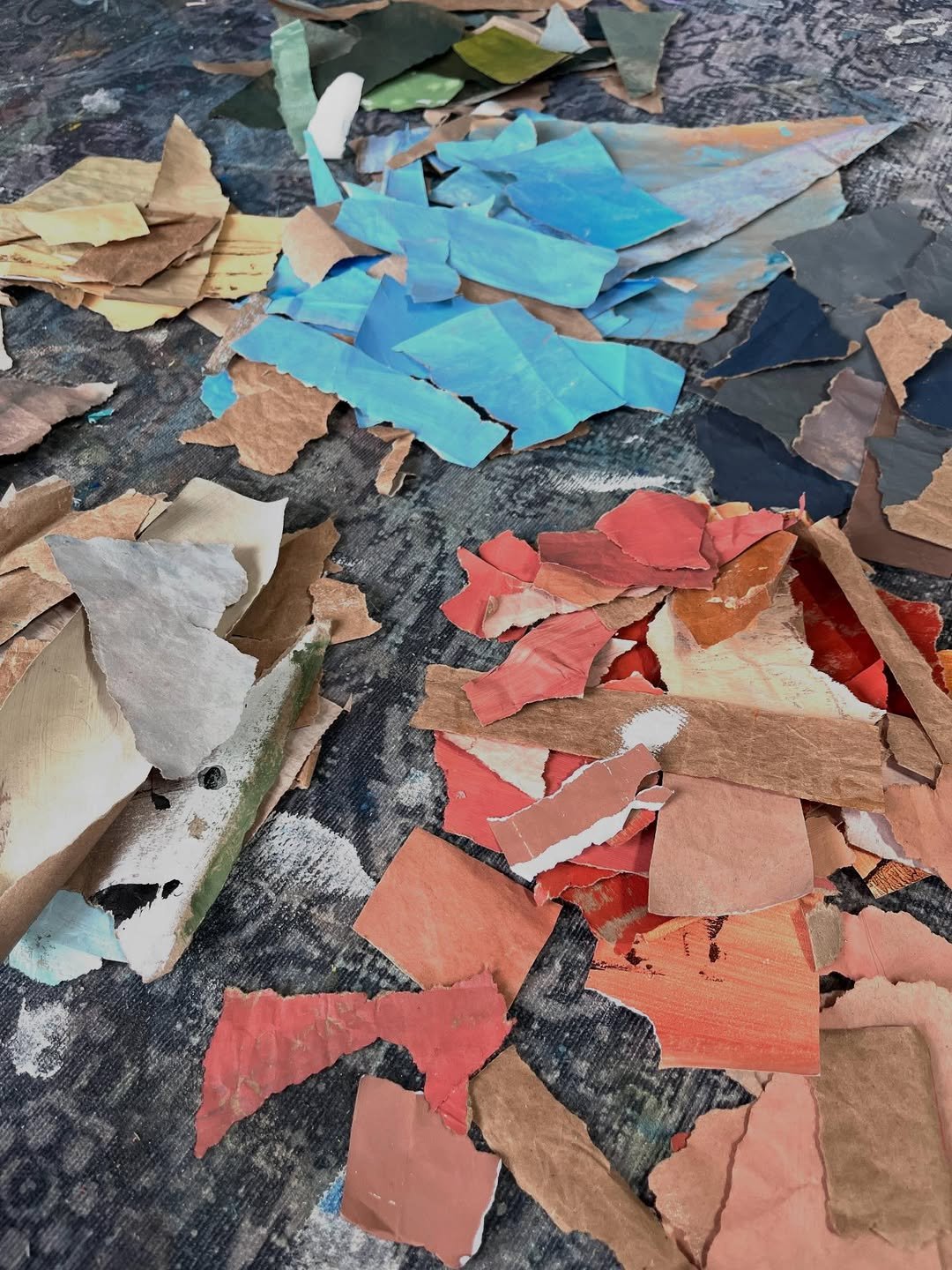
One of the things I love about this stage is searching through piles of small pieces of papers, looking for the right colours and textures to refine the artwork. On beach holidays throughout my childhood, I could happily spend the day trawling the beach for a specific colour, size, or type of shell. Scratching through my painted paper treasures takes me right back to that same happy, meditative sea shell collecting headspace.
5.) Integrating
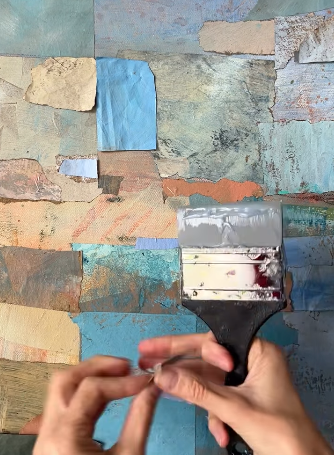
Early in my creative process I place the papers down fast and loose, but this close to finishing the artwork, I work very slowly, taking care to carefully integrate the papers. Click on the image below to watch me work on Insta and see how a tiny little fold in the paper helps a small spot of colour to settle in well.
6.) Finishing and protecting the artwork
Finally, to finish beautifully and ensure a robust artwork, I paint the entire artwork with several coats of gloss medium, which intensifies and seals in the colours and ensures that the papers remain well stuck down and won’t peel up. It also provides a protective isolation coat onto which I paint or spray satin varnish that ensures an even sheen across the whole artwork and additional UV protection and protection from scratches.
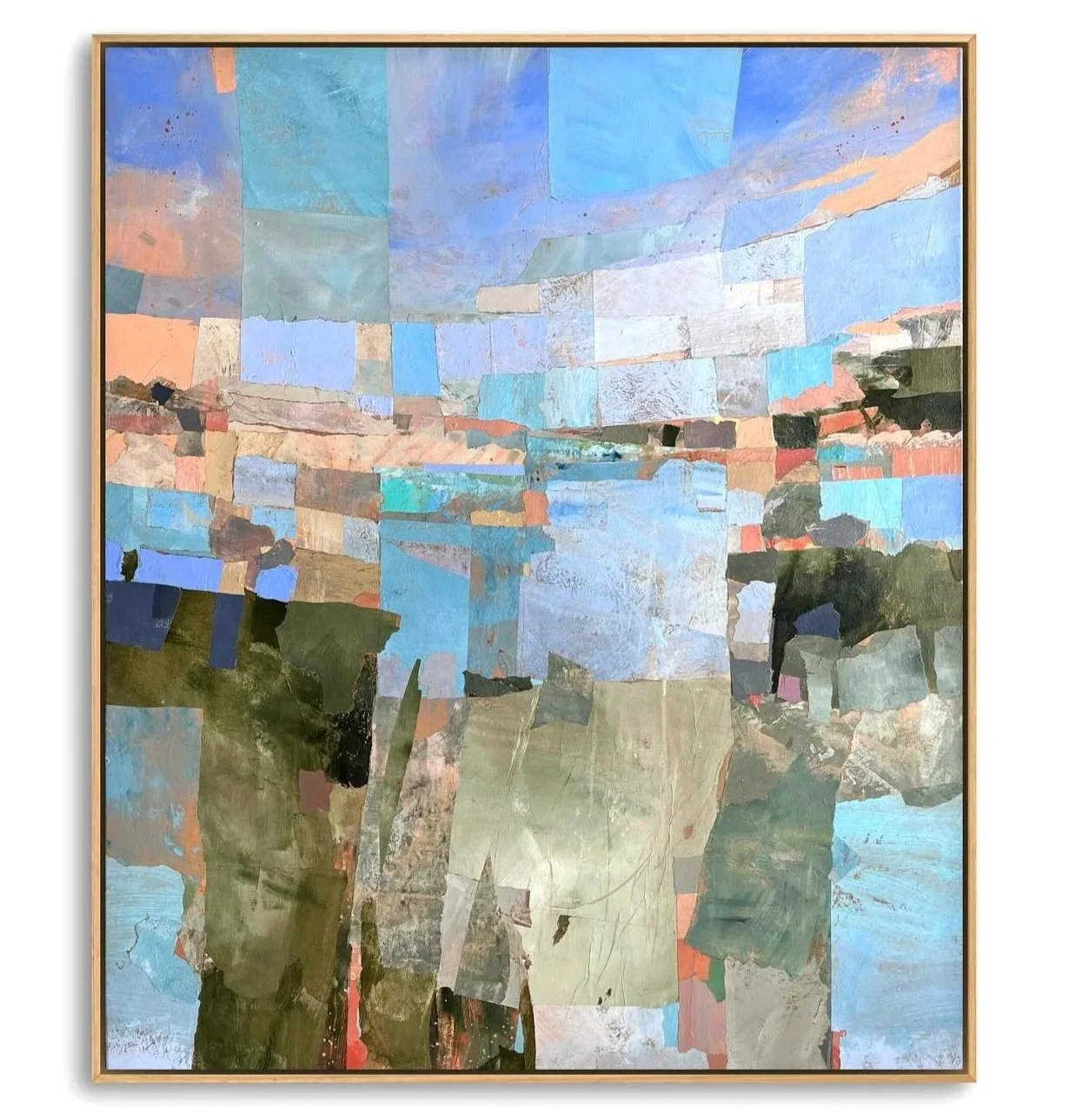
“Now hemmed in, now grasping all” (2025)
Coming apart and coming together
I love how this process mirrors the “coming apart and coming together” qualities of both the materials I work with and the inner themes of fragility, loss, and resilience that inspire me. Collage begins with cutting, tearing, breaking down - and then choosing what to keep, letting the rest go, and reassembling the pieces into something new and beautiful.
In the same way, my art-making unfolds in distinct steps: one focused on color, another on texture, another on shape and form - before all of it is woven back together in the final composition. Each stage in the process asks for its own space to be appreciated, and its own kind of attention.
There’s something deeply resonant in this: the beauty emerges not in spite of the breaking, but because of it. The tearing and separating create the raw material for something more whole and alive. It’s a process that feels much like grieving - the disintegration of what was, the searching through fragments, holding onto what matters most, releasing what can’t remain, and slowly reshaping it into a new life that feels both true and beautiful.